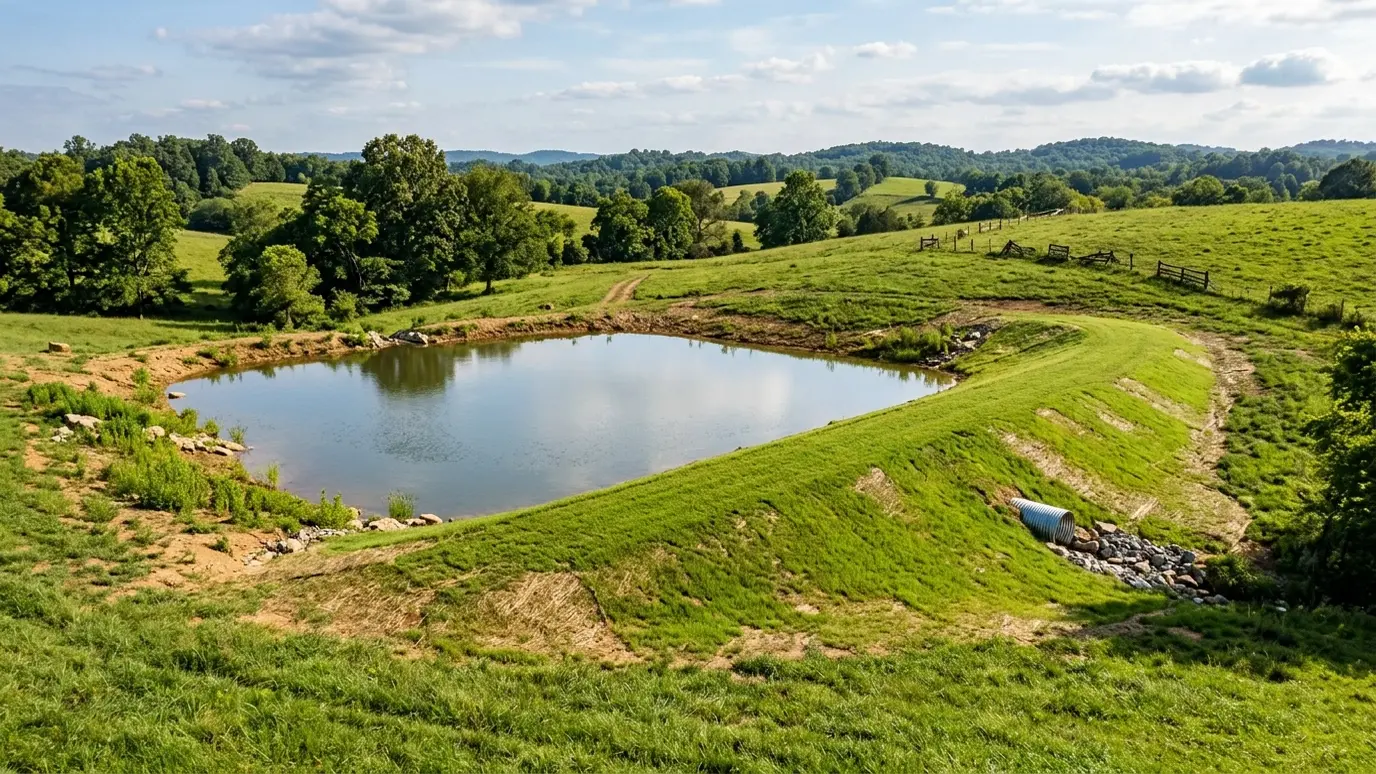
Larger ponds for livestock, irrigation, fishing and scenery, built with proper clay cores, spillways and stable banks.
A farm pond is a working part of the property. It waters stock, supplies irrigation, supports fishing and adds value and beauty to open land. Because it holds a lot of water, it has to be built with real earthwork: a sound dam, a clay core, a spillway that carries storm water safely and banks that will not collapse.
We evaluate the site, the soil and the watershed, and we plan the pond so it fills, holds and releases water the way it should. Heavy equipment shapes the basin and dam, and we place and compact clay in layers. Spillways, outlets and bank protection are built as part of the project, not added later.
Clay-rich soils hold water well, and sandy or rocky ground can leak. A few test holes tell us whether the pond can be built with native soil or whether it needs a liner or bentonite treatment.
A pond fails at its dam, and the spillway is the safety valve. We size the spillway for storm runoff, build it on stable ground and stabilize it with grass or stone so it does not erode.
Larger ponds, streams and wetlands can bring state and federal rules. We point out the likely approvals early so you can plan, and we avoid surprises in the middle of construction.
Trees growing on a dam can damage it, and burrowing animals can weaken it. Keeping the dam mowed and clear of woody growth protects your investment for years.
Drag the handle to compare.
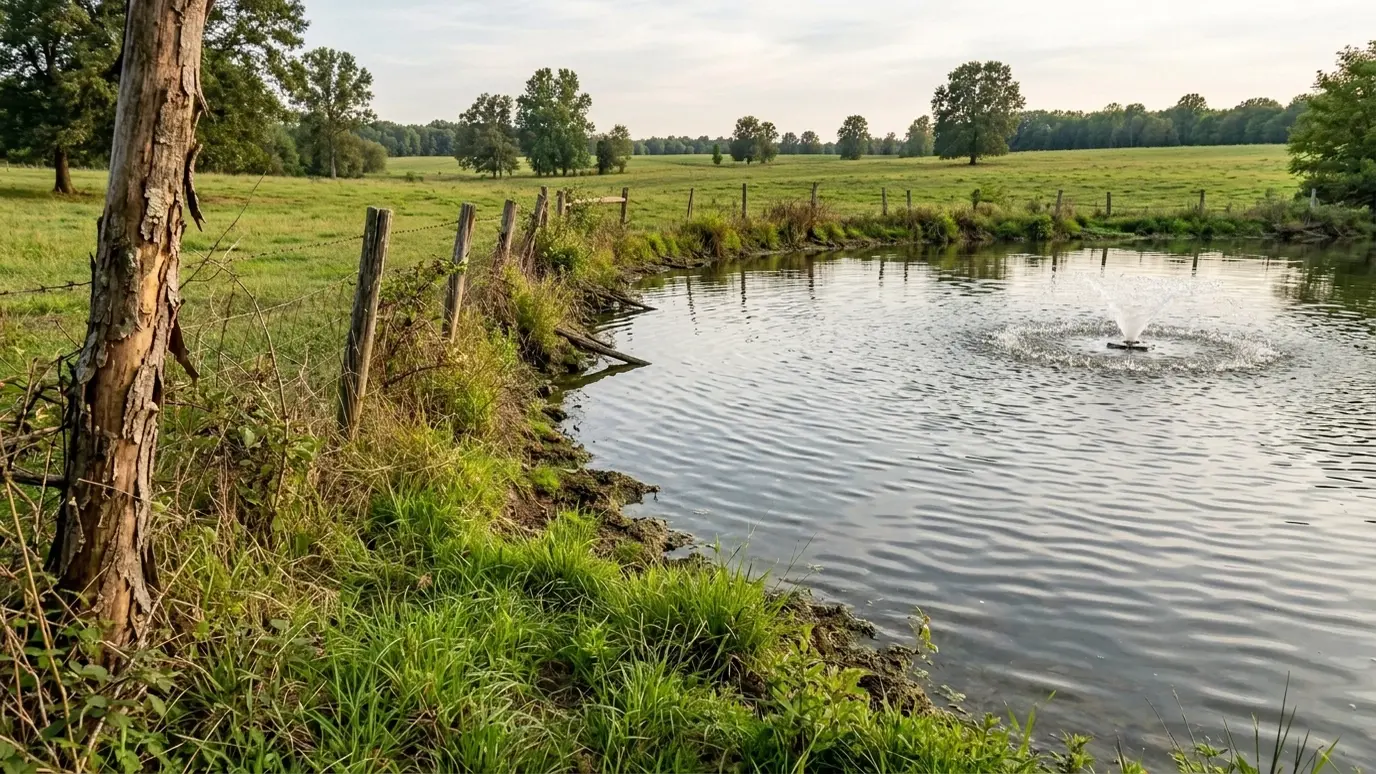
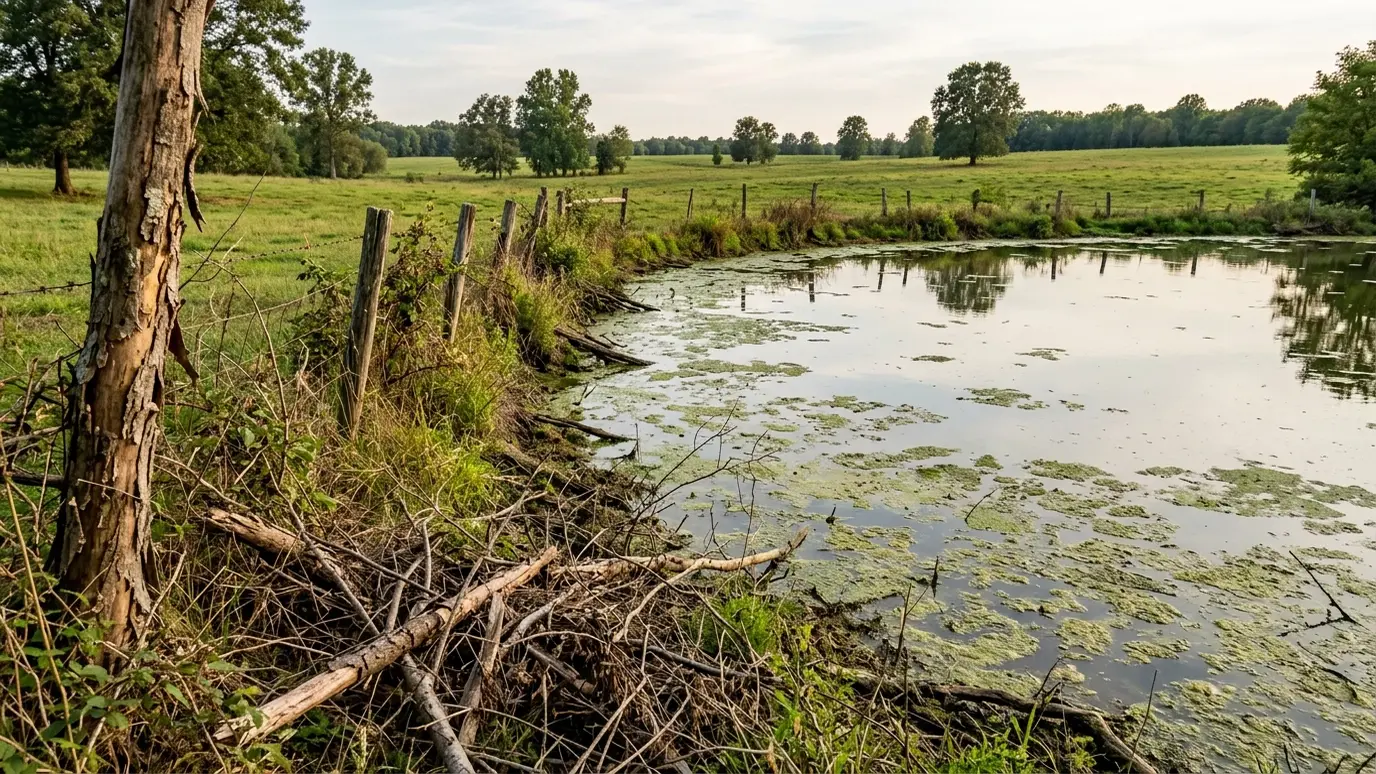 BeforeAfter
Dam, basin and clay compaction.
Placed and compacted in layers.
Sized for storms and stabilized.
We study where the water comes from.
Slopes and protection built in.
Planned for the uses you want.
Every topic has its own page with what to expect and how we approach it.
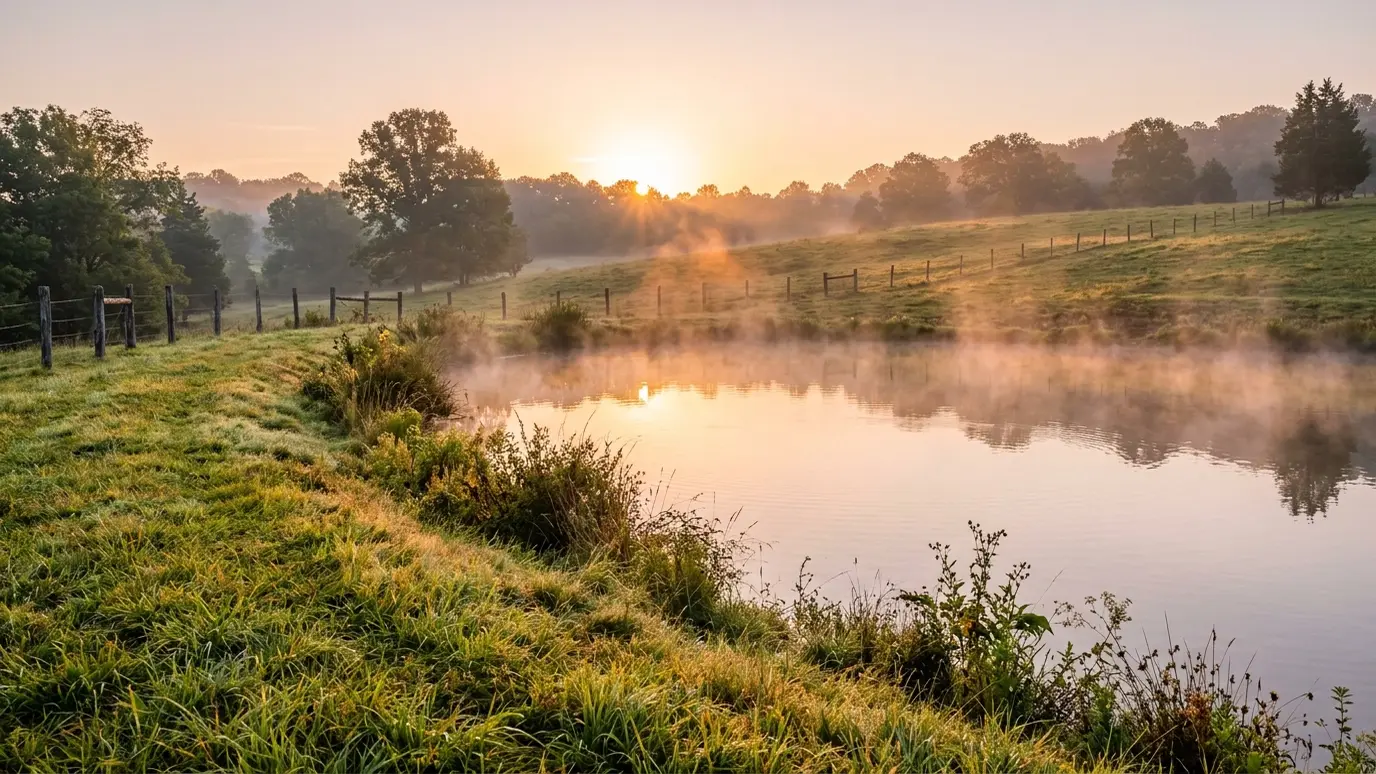 SituationFarm and Large PropertiesPonds for stock, fishing, irrigation and views on acreage: what size to build, how to keep them healthy…Learn more
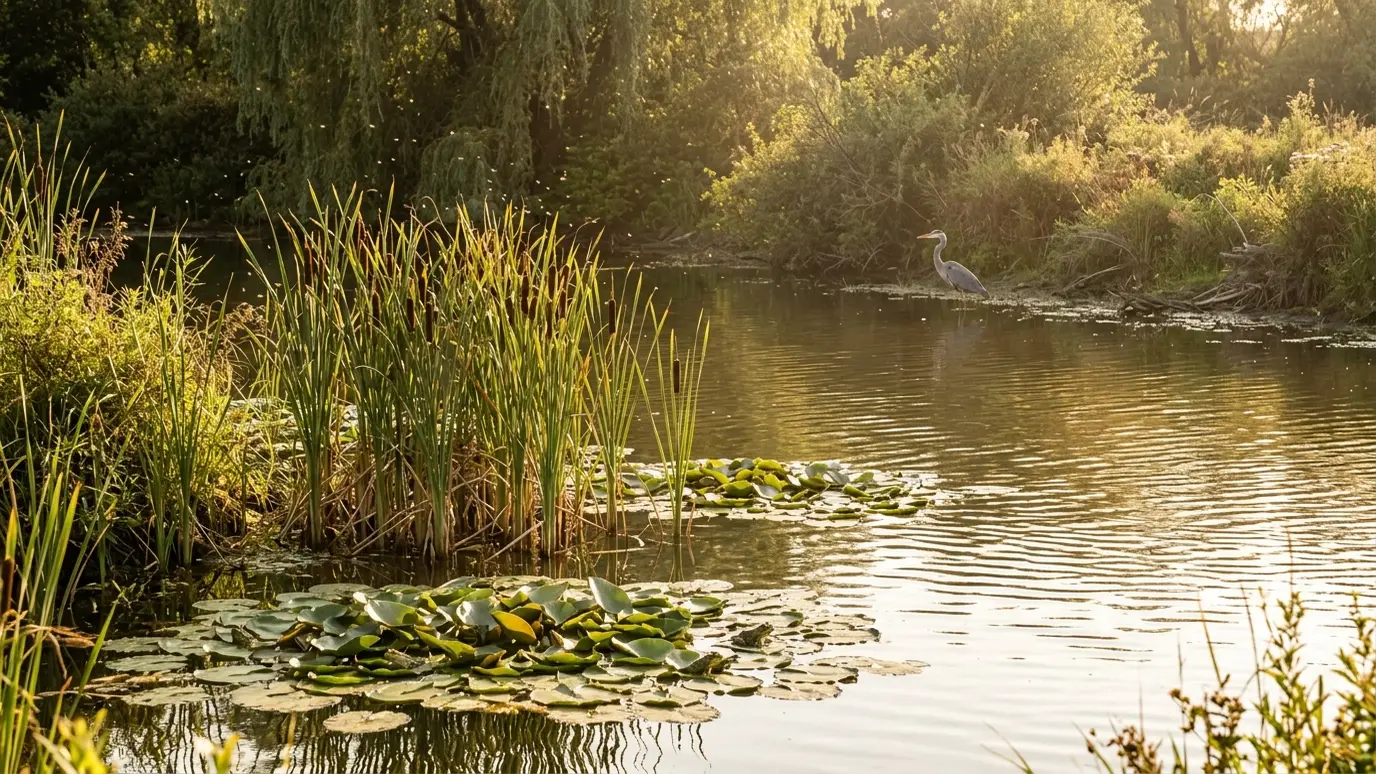 SituationWildlife FriendlyFrogs, birds and dragonflies love a thoughtful pond. Here is how to welcome them and how to handle…Learn more
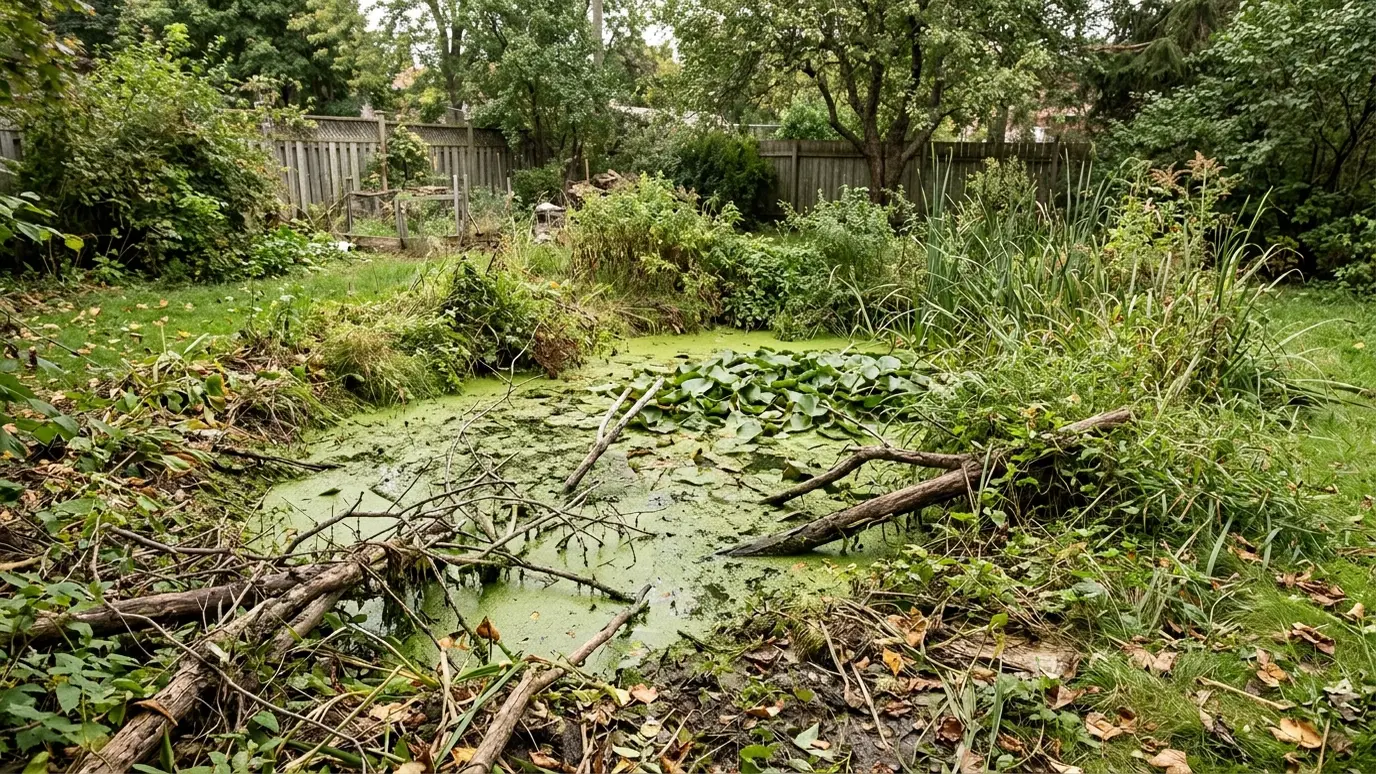 SituationNeglected PondsA pond that has turned green, filled with muck or been swallowed by weeds can nearly always be…Learn more
Enter length, width and average depth and see the gallons your pond holds, the pump flow to aim for and the water for a first fill.
Tell us what you have in mind and send photos of your yard. We plan the visit so we arrive ready.
We walk the yard, discuss size, style and sound and mark the shape on the ground.
You get a clear written price, and we agree on a day and an arrival window.
Excavation with shelves and a stable slope, with protection for your lawn and a call to 811 first.
Liner, plumbing, filtration, stone and plants installed with careful attention to the hidden parts.
Water treated, flow tuned and a walk-through with you before we leave.
Size depends on the watershed, the soil and what you want from the pond. We discuss uses, depth and volume before we mark the layout.
Clay soils usually do. We check the soil on site and recommend bentonite or a liner if it will not.
We can build the pond for fishing and discuss stocking options, with the state fish and wildlife agency as a good source of advice.
Aeration helps in hot weather and in deeper ponds. We can install a diffuser or fountain system as part of the build or later.
Mow it, keep trees off it, fill animal holes and check the spillway after storms.
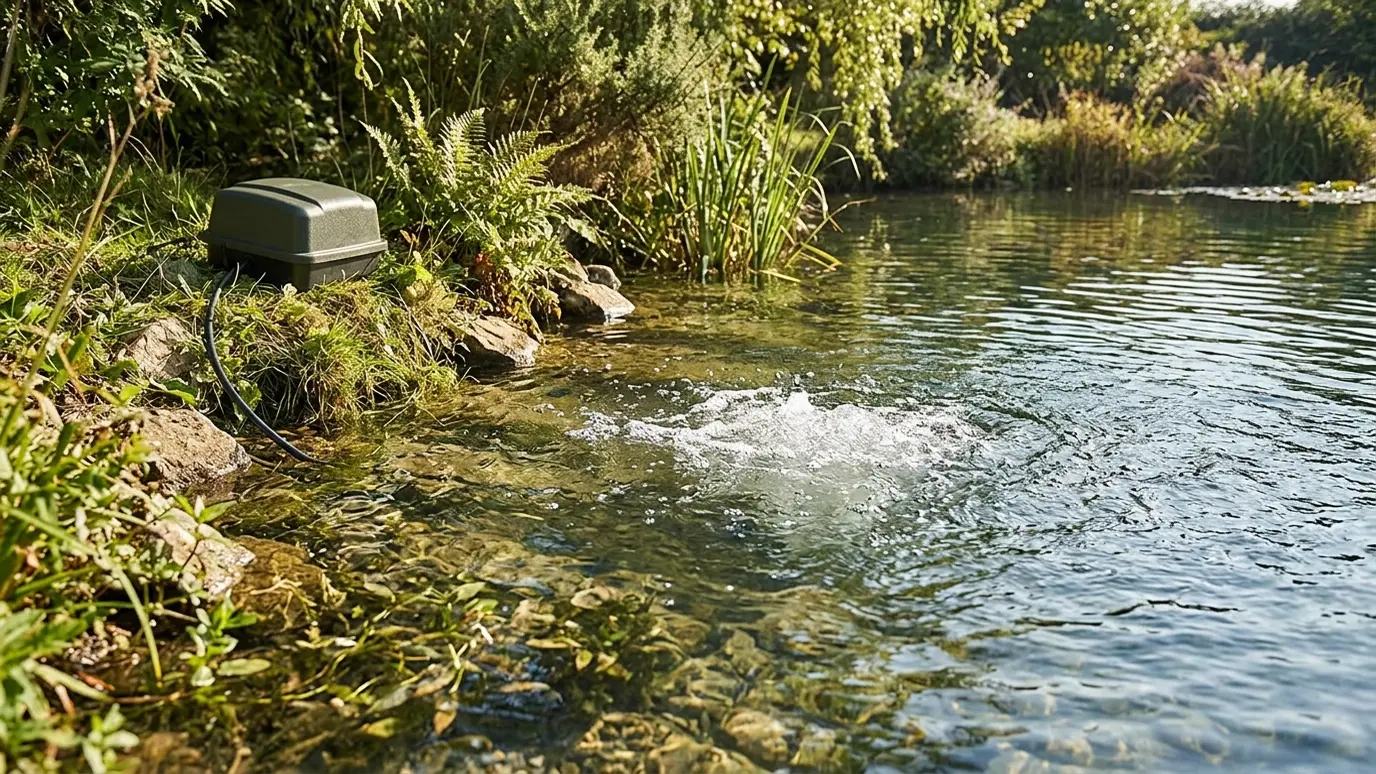 Pond AerationAir diffusers, bottom aerators and fountain aerators that keep oxygen up through hot summer weeks and winter ice.Explore
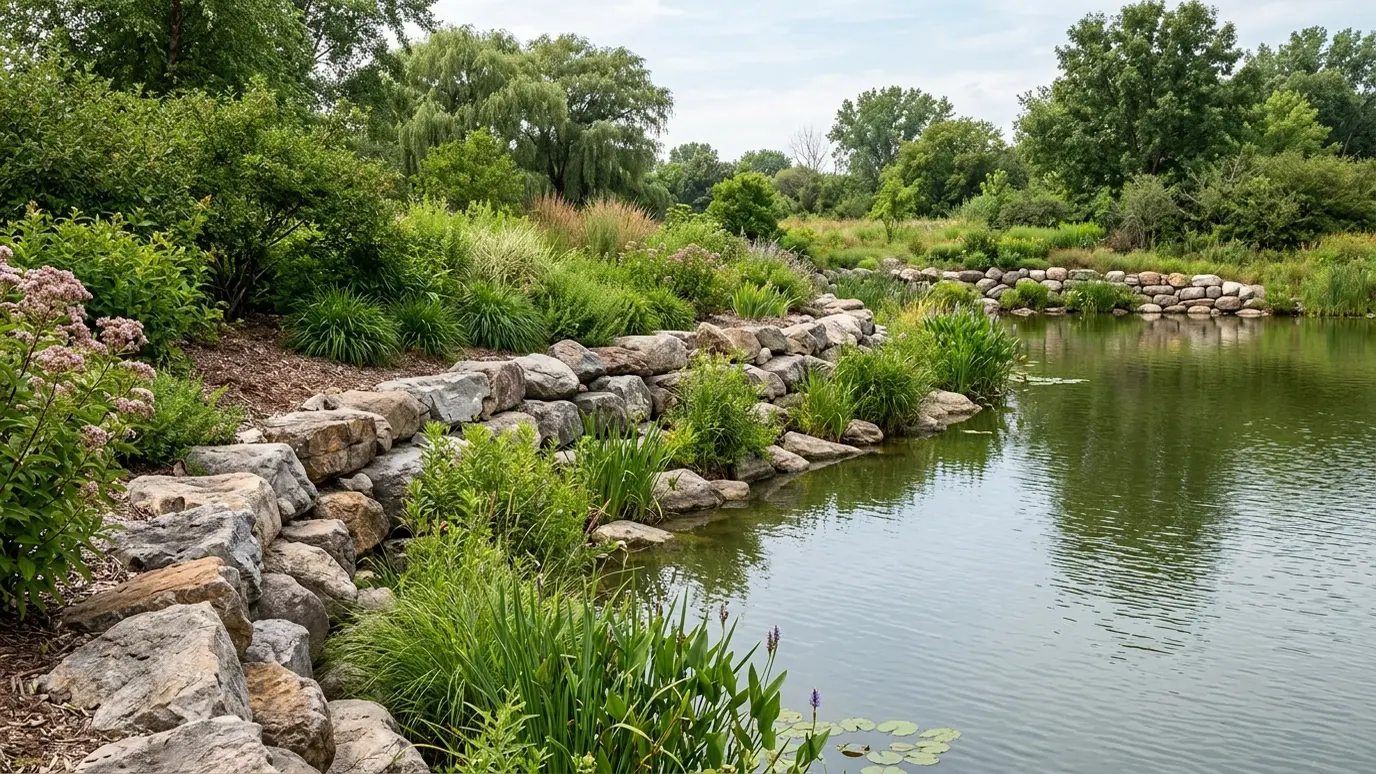 Shoreline Erosion ControlStone, coir logs and deep-rooted native plants that stop pond and stream banks from washing away.Explore
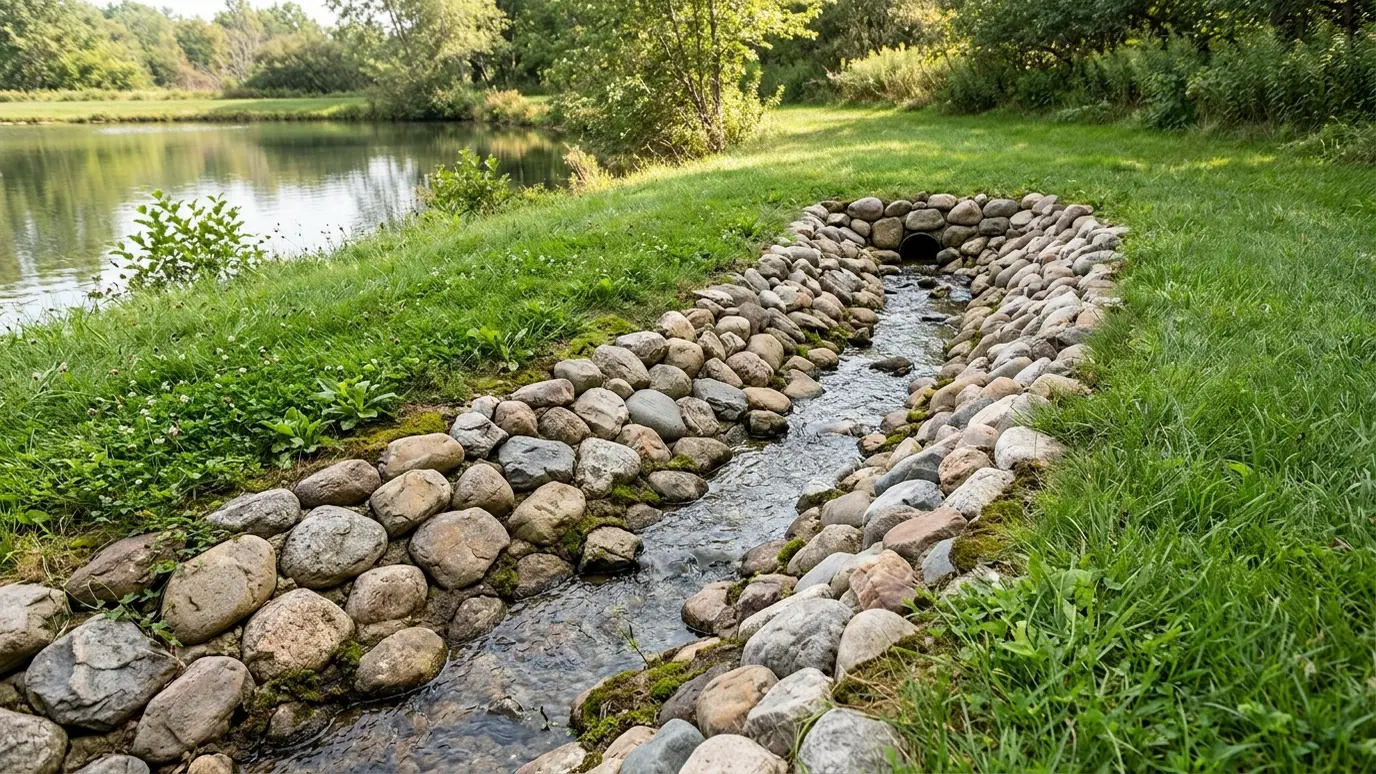 Spillways and OverflowsPlanned overflow paths that carry storm water safely past your pond, falls and banks instead of washing them…Explore
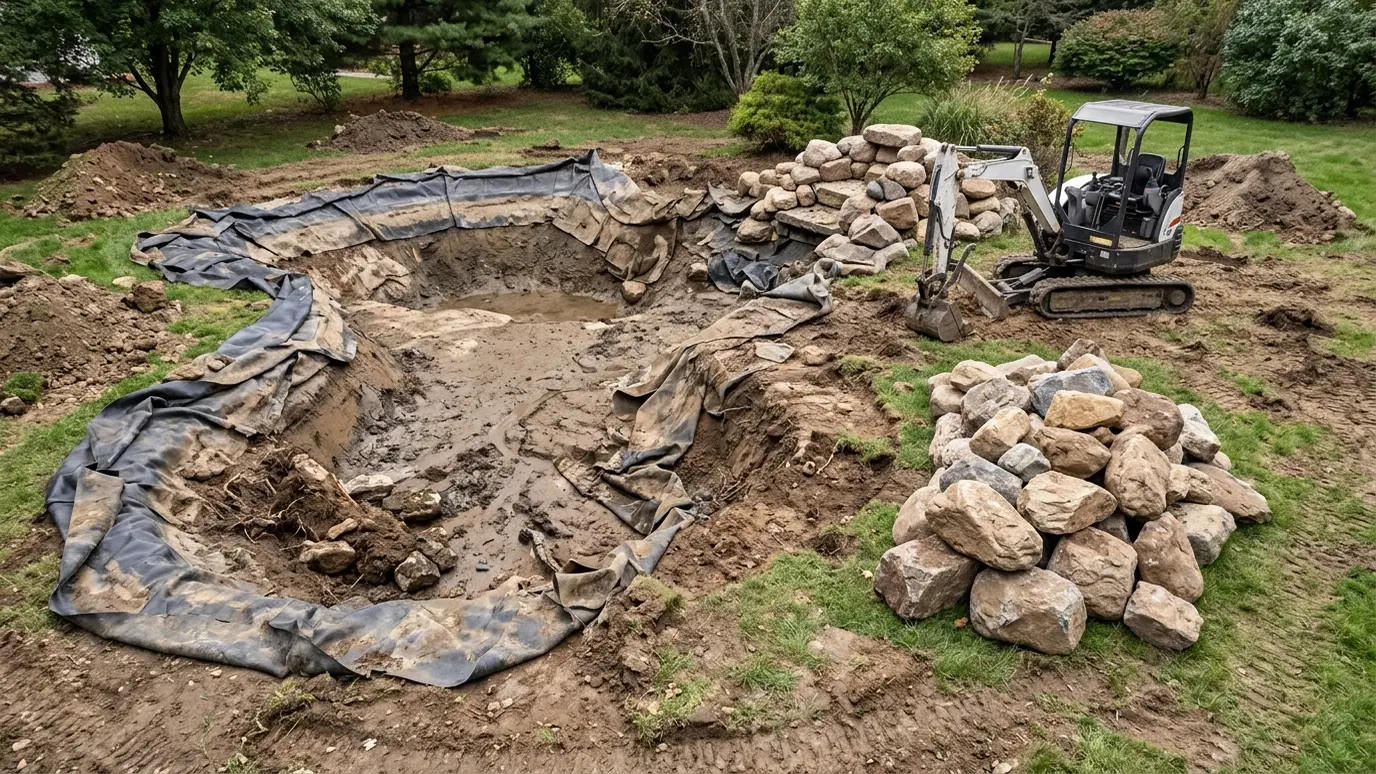 Pond RebuildsTired, leaking or poorly built ponds taken back to the bones and rebuilt with better depth, liner, filtration…Explore
Tell us about the job and we will call you back quickly.
Or call (615) 357-7797 to talk now.